Noel Austin coat of arms

Noel Austin coat of arms

Saturday, January 29, 2022

Robin Seward and The ICL pod

After one of ICL's periodic reorganisations I discovered I had been posted to the newly established Management Support Business Centre. I had recently embarked on a management consultancy career so I was interested to find out what was expected of me. My colleagues were a mixed bunch from all around the Company and, since they were all pretty smart, there was no risk of "being in the wrong room".

Despite having chosen the "professional" (i.e. non-management) career path, I found that I had someone to manage or, as it transpired, mentor. People in the know said to me, "Oh, bad luck, they've given you Robin - he's a right screwball." Robin Seward had had a relatively undistinguished ICL career but, as I had, he'd taken the opportunity to do a variety of different jobs, including a spell working for ICL in the West Indies.

We hit it off right away. Robin had a great sense of humour and I soon discovered he was one of the most creative people I have ever met. The reason people thought he was a screwball was that they didn't understand him. We shared an extensive vocabulary, not just of words but of concepts; in a ten minute conversation with Robin I could cover as much ground as half an hour with most other people. In consequence, conversations with Robin were often exhausting.

We had a highly productive relationship, the major fruit of which was the ICL pod. This was an octagonal meeting room equipped with the latest in (1985) information technology so that particpants in meetings could have the information they needed to debate the issues projected onto screens on the walls. Robin was also well connected in academia but in areas that didn't overlap with mine, so the pod reflected both streams of thought. In one corner was a workstation in which a support engineer could access and manipulate information and displays to aid the discussion (colloquially referred to as "playing the organ").

When Robin and I first came up with the idea we had no expectation that it would ever be built and we were astonished when our funding application was nodded through. We collaborated with an upmarket office furniture and decor supplier and we managed to put the prototype in place in three or four months. Its first ever use was for an ICL Board Meeting and Robb Wilmot, our CEO at the time, was impressed. He encouraged us to approach major accounts with a view to installing further prototypes and again, so my surprise, we were successful - no doubt his personal backing carried a lot of weight. Several pods were installed, including one at the LSE. I visited this a number of years later and it was being using for, I think, MBA teaching about behaviour in meetings.

This is not the place to go into a lot of detail but, if you would like to read more, I published a paper in the ICL Technical Journal which provides it. You can find it at https://www.fujitsu.com/ie/imagesgig5/ICL-Technical-Journal-v05i02.pdf

PS This link now appears not to work. If you would like a copy of the paper message me and I'll email it to you.

Thursday, January 27, 2022

The NHS - in the front line

In my early 20s I was diagnosed with what, at the time, was a life threatening illness. Fortunately I made a full recovery, thanks to the skill and care of everyone involved. This post isn't about that but about a couple of events I experienced much later, in my consulting career.

The first was when a colleague and I were running a management development programme in a Birmingham hospital. The General Manager at the time, who was our sponsor, thought it would be a good idea if we spent a little time on the front line, seeing the challenges faced by the staff, and how they deal with them. So it was agreed that we would spend a day as observers in A&E (the Accident and Emergency Department or, as my American readers would prefer, the Emergency Room). We arrived, donned some sterile clothing and presented ourselves. Two cases in particular stick in my mind.

  • A man who'd been involved in an RTA (Road Traffic Accident). I'm no expert but he was badly knocked about with broken limbs and a lot of blood. The team swung into action without any sign of distress and the whole thing was like a military operation - it was deeply impressive.
  • Another man who had collapsed in the street with a heart attack. The doctor who took charge was a house officer (junior doctor) who was learning the ropes, and it was her job to use the defibrillator to restart the man's heart. After a number of attempts, it was decided to stop. It was clear that the doctor in question felt she had failed him, and her grief was inconsolable. A colleague took her away to look after her.

The second occasion was several years later when I was carrying out an OPUS project (I'll write about the OPUS Method in another post). The subject of our resarch was the use in practice of surgical drapes - the (usually green) sheets that are placed under the patient and protect those parts of the patient which are not to be operated on. It was agreed that I would witness an operation so I could see how the drapes were used. An orthopaedic surgeon had agreed that I could attend one of his knee replacement operations so, after being prepared for my presence in the theatre, I went to meet him. "How much do you know about knee replacement surgery?" he asked. "Nothing," I admitted. "Would you like to know about it?" "Yes, please". "Right, if you agree to stand where I tell you, I will treat you like an medical student, and explain what I'm doing, and why." I agreed.

This is not the place to explain the process - I'm sure Google will tell you more than I possibly could - but I felt deeply privileged to have this access. It will surprise some people to know that I enjoyed it - but I did.

Decision Theory - What's the point?

Early in my management consulting career in ICL I developed an interest in decision theory. This was partly as a result of meeting several academics from different business schools who had different angles on the traditional decision tree approach. There was Prof Larry Phillips at the LSE with multi-attribute utility decomposition (MAUD), Dr Colin Eden at the University of Bath with his cognitive processing engine (COPE), Dr John Friend from the Tavistock Institute with his strategic choice method, and several others. As is the case with academics (in my experience, at least) each was deeply sceptical of the others and attempts at reconciliation were doomed to failure.

However, I took the view that the best way of finding out the strengths and weaknesses of these approaches was to try them out in practice. Because of who I am, the softer, more judgmental approaches had a greater appeal and I was able to secure several small projects learning about them and putting them to the test. These experiments came to the attention of my management "grandfather" and he came to me one day to tell me that he had secured the agreement of a major ICL customer to use my skills to help them make a complex decision. To say I was scared was an understatement - I certainly didn't feel that my knowledge had reached that level - but, as tends to happen to me, he said "Don't worry. I'm sure you can be of significant help to them - I explained that it would be experimental, so I'm only charging them £x" - he quoted a number in five figures.

So I set off for London to see the client. I spent several weeks interviewing people, seeking to understand what the decision was all about and, over time, developed a large and complex model embodying both objective and subjective variables. We ran the model a number of times and began to understand its behaviour. Eventually we felt we had something we could rely on. We ran it for real and came up with a result which seemed intuitively in the right ball park. We presented it to the decision maker. "Very interesting," he said, and asked a couple of good questions about how the model was constructed. He then suggested a couple of changes in weighting, and we ran the model again. "Still not quite right," he said, and suggested a couple more changes. We implemented them. "Yes, that feels right," he said, and we went with the result. What I realised, in retrospect, was that my job had been to create a convincing justification of a decision that had already been made.

I wonder how often that happens.

My influences: Noel Buckland - updated

Soon after I moved to work in East Anglia for ICL, and it became clear that my primary focus was to be on stock control and production control systems, I was introduced to a man called Noel Buckland, an internal production control consultant. When he left school, Noel had gone to a London medical school but, living in Letchworth, had secured a summer vacation job at the local factory of what must have been the British Tabulating Machinery Company. He found the manufacturing environment more to his taste than medicine and never returned to medical school.

By the time I met him Noel had been an ICL factory manager and then, after a heart attack, had stepped back into an advisory role. He and I formed an association, shortly followed by a friendship; he was a kind, generous, funny man. People began to refer to us as “The Two Noels”.

The first time I took Noel to meet a client, I discovered that he already knew many of the Production Directors with whom I was to work, which was the case the first time we carried out a customer visit together. We were shown into the Production Director’s office, seated and given coffee. Noel’s opening remark startled me. “Well, Ron,” he said, “how are the boy’s budgies?” I thought we were on a business call and this descent into trivia worried me. It turned out that Ron’s son bred, showed and sold budgerigars and Ron was very proud of him. After a short while we got down to business and I recovered my composure.

After the meeting I asked Noel why he’d started talking about budgies and he explained the concept of rapport building, which I hadn’t come across before.

The next two meetings with other customers proceeded in like fashion and, after the second, as we walked back to Noel’s car, I said, “I can see how it works, Noel, but how do you remember all this stuff?” “I don’t”, he said and from the glove box of his car retrieved a small black covered notebook. Each page was covered with notes on the various people he met in his travels. Lesson learned!

Noel had a fund of stories about his experiences and one of them was about a well known washing machine manufacturer.
They had launched a new model with a perforated stainless steel drum and demand considerably outstripped supply. The limiting factor was the availability of the perforated stainless steel from which they made the drums. They were so keen to find further supplies of this steel that they took salesmen away from their roles and directed them to search for another supplier of the steel.
Eventually a salesman came back with a sample from a small steel stockyard. Apparently, the owner of the stockyard said that he would get small quantities of the steel from an intermediary; supplies were intermittent but he would be delighted to let the washing machine company have them.
The metallurgists examined it and said that it was identical to the steel they were already using, and clearly came from the same source. Enquiries were made and a story emerged.

The washing machine company was in the habit of issuing batches of 105 sheets into the factory in the expectation that wastage would not exceed 5 sheets - a common manufacturing practice at the time. But in fact there was no wastage; the steel shop foreman was keeping a few out of each batch for himself and selling them to the intermediary at a nice profit.
Until they found out.
Noel and I visited many different manufacturing sites during the three or four years we worked together. He had a Sherlock Holmes-like ability to notice little signs which told him what was going on.
We used to walk round the factory - well, Noel used to saunter - he was really laid back. He would often stop as we walked around to engage someone in conversation - a machine operator, a man driving a fork-lift, a guy sweeping the factory floor - and knew just what to say. The conversations always ended with a smile and a handshake but they were never without purpose.
On one occasion we were given a guided tour of the works and then went back into the office to talk to our host, who said, "Well, Noel, what do you think?" Noel said, "Two things to start with. You need to sort out your tool stores - there's lots of redundant stuff in there. And your piece work rates need looking at."
Our host looked at him, open-mouthed. "How do you know that?" he said. "Well", said Noel "the boxes of tools on the top two shelves in the tool store had a quarter of an inch of dust on them. They haven't been touched for years. And many machines in the machine shop had boxes of parts kicked under them. What this tells you is that the machine operators work on them only when there are no better paying jobs to do."
I learned a lot from playing Watson to his Sherlock Holmes.

Tuesday, January 11, 2022

My influences: Peter Honey

When I was a few years into my career in ICL it was decided I should attend a course entitled "Profile Training". This was regarded as a privilege as it was run by an external academic, and the academic in question was Peter Honey, at the time relatively unknown but later to become internationally known as the author, with Alan Mumford, of the "Honey & Mumford Learning Styles Inventory".

As I recall it, the goal of the course was to help you understand yourself and use this knowledge to help you understand other people. I was excited to be attending but was somewhat taken aback when we were all asked to complete a series of (I think five) psychometric questionnaires. The science of psychometrics was unknown to me at the time and, working my way through the first questionnaire, I decided it had about as much credibility as those questionnaires in women's magazines of the time claiming to show you whether you were a good lover.

Peter Honey's feedback on the first questionnaire took me by surprise - it did seem to describe someone I recognised. At the end of the fifth questionnaire (the end of day two, I think) Peter took the results away with him and, early on day three, gave each participant overall individual feedback. I was shocked by mine - I had been sussed! From then on I paid close attention to everything he said.

The only thing I remember from the rest of the course is that we spent some time on Transactional Analysis, which explains how the language people use in conversations modifies the behaviours of the other participants. Tom "Big Al" Schreiter demonstrates a clear understanding of this in his books on network marketing.

But ever since I met Peter Honey I've had a fascination with anything that helps me know myself better and I still do. Thanks Peter!

https://www.peterhoney.org/

Learning how to invest

Since my pension fund is likely to get called into action as a safety net in the foreseeable future, I keep a close eye on the performance of my investments, and try to make some kind of sense of the stuff I read in the financial columns. It's been clear to me for some years that most people in the industry don't understand they companies they invest in nor, indeed, do they take any interest in them. It's all about trends and statistics. Necessarily, the indicators they use are historical and they just use statistical trend analysis and extrapolation to "understand" what's going on. Perhaps it's unfair to describe it as gambling but the distinction is a fine one.

I started work in the computer industry (English Electric Leo Computers Ltd) when it was in its infancy, and was fortunate to work in an office in London with a load of very clever and well informed people. Some of their conversation was about their stock market investments and it stimulated my interest in the topic, though my income didn't allow me to do anything about it.

The following year I moved to Bristol, my home town, and a couple of years later took on a sales role. The increase in income re-awoke my interest in the stock market. Coincidentally a local firm of stockbrokers occupied the floor below us in our office building and I was wondering aloud how to approach them as a naive investor when one of my colleagues said, "Oh, my Uncle Fred works for them. I'll introduce you if you like." A meeting with Uncle Fred was arranged, and I walked down to his office to meet him.

Uncle Fred was a genial old chap, and we got on well. He explained that he couldn't give me specific advice but that he would give me some general pointers. I agreed. The advice he gave me will be familiar to anyone who invested in the stock market at the time. He said, "Buy when prices are low and sell when they are high; most people will be doing the opposite but have confidence in your own judgement. And only ever invest in companies you know about and understand".

My sales role brought me into contact with directors and senior managers of local companies. One such company was Reed & Mallik, who were working on the new M32, the motorway spur from the M4 into the centre of Bristol. I had a meeting with the site manager and was able to persuade him that our payroll service would meet his needs. However, I would need to go to meet the Finance Director at their head office in Salisbury to get a signature.

I got to Salisbury to meet the FD, and spent an interesting hour with him and a couple of senior managers having the business explained to me. My researches had shown that Reed & Mallik's share price was in the doldrums and I concluded that the stock market's valuation was in error. The following day I bought a parcel of shares for 10½d each and, six weeks later, sold them for 1s 4½d each, a profit of around 50% after dealing expenses.

I had many other successful investments, and a few failures, of course but I've always invested by focusing on the fundamentals - what the company does, how good it is at doing it, and what's happening to the markets on which it depends. I still do. It works.

Friday, January 07, 2022

Mr JE Barton

My father, Ken Austin, was born in 1908 and grew up in Sandford, near Winscombe, North Somerset, where his father was the village postman and ran an apple orchard. Dad attended Redcliffe Endowed School and was then apprenticed to Wake & Dean, cabinet makers in Yatton.

When I was awarded a scholarship place at BGS in 1955 my father recalled an experience from his early working life. Wake & Dean were awarded the contract to equip the new library at Bristol Grammar School and, as an apprentice, my father became part of the on-site team. Most Wake & Dean clients dealt only with the foreman, and then as little as possible. However, at BGS the then Headmaster, Mr JE Barton, was in the habit of visiting the library to inspect progress. When he did, he spoke to every member of the on-site team, including the lowly apprentice. My father remembered being deeply impressed.

Postscript

After writing this piece I Googled Barton and was astonished to come up with this:

https://stradlingcollection.wordpress.com/the-bauhaus-in-bristol/the-bristol-legacy-je-barton-ken-stradling-and-the-bristol-guild/

No wonder my father was impressed by meeting him.

Wednesday, December 22, 2021

Libraries

I grew up in Knowle Park, in south Bristol, and attended the local primary school, known at the time as Knowle Park Junior Mixed School; for most of my time there my classroom was in an offshoot of the School known as The Annexe.

I have written elsewhere about some of my experiences there but this is a little different. The Annexe was a ten or fifteen minute walk from the local Library and, towards the end of my primary schooling, the class used to process in a crocodile from the School to the Library. On our first or second visit each member of the class was equipped with a Library card in his/her name, and encouraged to explore. I took advantage of this privilege and regularly borrowed books until I went off to University; my visits to the Library were treasured interludes in my life.

Right from the start I looked at books some of which were too old for me but my curiosity and sense of adventure were stimulated. I discovered several authors for whom I still retain an affection, including Eric Linklater, WW Jacobs and Arnold Bennett and, joy of joys, a complete series of Arthur Ransome books so that I was able to read those I didn't already own. Oh, and Hugh Lofting, who wrote the Dr Doolittle books.

However, the introduction to the Library led to one discovery which led to my first real ambition, which became a goal and which I eventually achieved. There was a very respectable heraldry section and the subject grabbed my attention. I read every book in the lending section and discovered another book, a peerage perhaps, in the reference section.

What appealed to me was that a coat of arms was not only visually interesting but often contained all sorts of clues to the history and activities of the bearer. And it was systematic; anyone who knows me knows that I am a sucker for systems.

My parents, of course, could not remain ignorant of this passion and, for Christmas or my birthday in 1954 they gave me a copy of Boutell's Heraldry, one of the most respected text books on the subject. I had discovered that anyone who had led a respectable life and had made some kind of contribution to society could apply for and could reasonably expect to be granted a coat of arms, and I remember sitting in bed, looking at Boutell, and deciding that this was something I would do.

In 2000, not long after the death of my father, and using part of his legacy, I visited the College of Arms in Princess Victoria Street and met Richmond Herald of the time, Patric Dickinson. After an interesting meeting during which he interviewed me about my life, it was agreed that he would come up with a suggestion, which I could accept or not as I chose. The design shown was his first draft and was not at all what I had expected, However, I accepted it and a few weeks later, the arms were officially granted.

The point of this post, however, is not about the arms. It is about the power of libraries to influence and inspire young people, as it did for me.


Saturday, October 31, 2020

An administrative oversight

After I'd been in the computer industry a few years I was charged with the task of finding out what my customers needed to support their production processes so I began to ask them.

On one occasion I was in a production control office talking to the admin guy who printed and distributed the works order sets (everything was on paper). Each set consisted of half a dozen or so different coloured foolscap pages: white, yellow, green, blue - each colour went to a different function - and two pink copies. "Why two pink?" I asked. "One is for stock control and I keep one for audit" came the reply, and was shown a cupboard the size of a large wardrobe full of pink sheets. "What happens to them?", I asked. Answer came there none.

I smelled a rat and began to ask around. It emerged that, 15 years before, the company had carried out a contract for, let us say, the New Zealand navy, who had picked up the sheets every few weeks. The contract had finished after a few months but nobody bothered to tell the admin guy, so he'd carried on printing them.

At the time, too many computer systems unquestioningly automated the existing manual systems enabling people, as it was said, "... to make the same mistakes but much more efficiently."

A trip to Milan: part 2

Some years ago I was working on an assignment where I had meetings with the European country CEOs of an American multi-national. On this occasion I was meeting the CEO of the Italian operating company. I arrived in Milan and got to the office a few hundred metres from the cathedral. I was confronted by a huge wooden door which opened as soon as I rang the bell. I entered a balconied courtyard with fountains and flowers - just stunning. I presented myself at reception. "Oh, the chairman is out today so we've put you in his office".
I was ushered into a large room full of antique furniture, at the far end of which was an ornate desk the size of a table tennis table. Happily there was a L-shaped arrangement of modern leather seating in the far corner so I seated myself there. No sooner had I done so than the coffee arrived and the PA told me that the CEO would be with me shortly.
He entered the room and walked towards the desk, realised I wasn't there, and turned to see me. He took me by the elbow, led me to the desk and seated me behind it. "Your place is here", he said, "we have to observe the formalities".
This was not a corporate viewpoint, so I can only imagine it was something to do with Italian culture. I don't have enough experience to know but it was an interesting episode.

A trip to Milan: part 1

I caught my flight as planned and we took off on time. Some way into the flight, the plane began to lose height rapidly, the oxygen masks dropped from the overhead lockers and we were clearly undergoing some kind of emergency. A bunch of American women behind me began praying aloud and a lot of people were evidently frightened. The cabin staff kept an impressive cool.

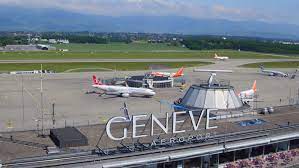
After what seemed like an age the plane levelled out and the captain came over the intercom, cool as a cucumber. "As you will have gathered, we had a cabin depressurisation. We are now flying safely at 10,000 feet and everything is under control. However, the Alps where we need to cross them are 13,000 feet high and this aircraft isn't going any higher than 10,000 feet, so we shall be landing at Geneva. The cabin staff will discuss with you your options for onward travel."
There were two options: catch the train from Geneva to Milan which would arrive at 4pm or wait for the next flight from Geneva to Milan which would also arrive at 4pm. Since my meeting was scheduled for 2pm I decided to cut my losses and return to London.

When we landed in Geneva, I went to the transfer desk and explained my predicament. "There's a seat on a Swissair flight leaving shortly; if you run you'll be able to get on it. I'll get them to hold until you arrive." I trotted through the airport and was ushered onto the plane. The door closed behind me. "We've had to put you in first class; I hope that's OK", said the stewardess.

I turned left towards my seat; it was at the front on the right hand side of the gangway, facing the bulkhead. On the left hand side I saw the instantly recognisable head of a TV actress who, at the time, was an object of desire for many British heterosexual males. I sat across the gangway from her but was unable to muster the courage to speak. Duh!

My influences: Edward de Bono

It must have been around 1970 that Management by Objectives (MbO) became a fashionable management strategy. The idea was that the manager of a team would be set objectives for his team and then he would agree with his staff individual objectives which, if achieved, would lead to the team over-performing. The clever bit was that, in agreeing objectives with an individual the manager would ensure that the staff member's ambitions were reflected as much as those of the business. My employer took it seriously and it worked well.

The process of setting and reviewing objectives took place during an annual objective setting round with quarterly reviews. At the time it was a common theme that I was seen as being not particularly creative. My boss asked me to look for an appropriate course and make a proposal for funding; I was aware of Edward de Bono's Lateral Thinking ideas, so I found a course he was running in London, made the necessary funding application and, to my surprise, it was agreed.
I turned up at the venue to discover there were about 24 of us attending a three-day (I think) event. It's a long time ago and I don't remember much of the detail except for the concept of "random juxtaposition"; if you were stuck with a problem you closed your eyes, opened a dictionary randomly, pointed a pencil onto the page and were then honour bound to make a connection between the problem and the word you'd selected. I don't remember the problem I'd been given to solve but I'll never forget the word; it was "custard". There were some other methods too but I don't remember them.
At lunchtimes; we sat on tables of 8, I think, and Edward sat on a different table on each day. The man was an ideas freak - everything that anyone said stimulated an idea and a forty-minute conversation generated a bewildering number of ideas.
I carried on using the random juxtaposition technique for a while, and then it stopped being necessary. After a while it was my creativity, not the lack of it, that was the problem, and it still is. Keeping focus on what I'm doing is a constant challenge but I have a much more interesting life than I would have otherwise.
I owe Edward de Bono a lot, and it was a real privilege to have had the opportunity of spending time with him.

https://www.debono.com/

Swedish wedding reception

Soon after I became a self-employed management consultant I purchased the UK licence to a consulting methodology developed in Sweden, and it provided the dominant source of my income for 23 years until I stopped in 2015. There were licensees in 8 European countries, the USA and Australia – about 20 consultants in total – and for several years we got together every year to share experiences and discuss new developments and applications.

The practice was to meet in a different country every year and the first meeting I attended was in south west Sweden not far from Gothenburg. The hotel was on the coast near Fiskebäckskil and had its own moorings with a short landing stage projecting around 20 yards into the sea.
We talked business during the day and then, in early evening, we would socialise. On our final evening we were having pre-prandial drinks on the quay when a small boat pulled into view. As it got closer we realised that, standing on the deck, were a bride and groom, clearly on their way to the hotel for their reception.
We joined their guests in congratulating them and then went into the restaurant for our conference dinner; at more or less the same time the wedding party went into the adjoining room, separated from us by a white painted timber and glass partition. After a little while, they began to make speeches. There had already been several so we enquired of our Swedish colleagues what was going on. They explained that, at a Swedish wedding, all the male guests had the right to make a speech, and most of them exercised that right. They were evidently consuming a lot of alcohol, too, because proceedings were increasingly uproarious.
They were still at it when we went to bed at 11:30

Thursday, September 10, 2020

My Influences: Dr Douglas Gawn

I'm not sure whether I was a sickly child but I used to suffer from frequent bouts of bronchitis. In retrospect, this wasn't surprising; I grew up in Knowle Park, in Bristol, and we were only a couple of miles from the engine sheds at St Philip's Marsh. One of my early recollections is walking to school in the fog, which smelt acrid and often had a pronounced yellow tinge.

Our GP was Dr Douglas Gawn; his white hair and lined face led me to believe that he was old but my mother later told me he was only in his 30s. He had spent time in Japanese prisoner of war camps so perhaps this was the reason.

On one occasion, when I was suffering from a particularly severe bout of bronchitis and was feeling pretty miserable, I remember Dr Gawn standing at the foot of my bed and saying, "Young man - if you smoke, it will kill you."

One can argue about the timing but the message was received and understood. I've never smoked, ever. Not even once. I owe you, Dr Gawn.

https://pdfs.semanticscholar.org/853a/5930e44c411c23b3fc2fe6889a1f5af0ea53.pdf

Saturday, January 08, 2011

My influences: Michael Booker

As reported elsewhere in this blog, from 1955 until 1962 I attended Bristol Grammar School. I had never been a sporty child - my interest lay in books and I read voraciously - so attending a school where team sports formed an important part of school life came as something of a shock.

I never achieved distinction. I managed to get a place in the relevant house rugby team as I progressed through the School but never achieved selection into a house cricket team. Which was a shame as I rapidly developed an affection for the game which endures to this day - We beat Australia!!!!!

Early in my summer term in the Removes (yes, we still used the archaic terminology in those days) my housemaster Michael Booker approached me as I was reading the House notice board for confirmation that, again, I would not be representing the House at cricket. "Austin", he said, "have you looked at the First XI notice board?" I said I had not. "You should", he said, "there is a notice that will interest you".

I proceeded to the First XI notice board, which was just inside the main door, and scoured it for items of relevance and interest. I couldn't see anything that could possibly concern me. I scoured it again. Towards the bottom I saw a small typed notice saying that the First XI was in need of a scorer and applications were invited from interested parties. "That must be it", I thought and tentatively approached Michael Booker for confirmation. "Yes", he said, "it's a job that would really suit you." I applied and, to my astonishment, a few days later my form master passed me a note saying that I had been appointed.

Thus began my long, though somewhat intermittent, career as a cricket scorer. The idea would not have occurred to me had Michael Booker not suggested it.

It was not until my forties that I realised how influential this man had been in my life. He kept track of old members of his house for years, and I would occasionally get a personal, handwritten letter asking me to contribute to some School appeal of one sort or another and to enquire after my health and prosperity. But what I had not understood was his deep commitment to making the School's quality education available to children whose economic circumstances, like mine, did not make them obvious candidates. I was lucky enough to obtain what, in those days, was known as a (Bristol) City Scholarship. But the cancellation of the Direct Grant scheme put schools like Bristol Grammar School beyond the reach of "ordinary" people. When Michael Booker died, some years ago, the Fund set up to grant scholarships to people who might otherwise have no hope of attending the School was named after him. The respect in which he is still held guarantees a continual income from Old Bristolians who have moved on to higher things; some of the sums donated are eywateringly large.

Anyhow, Michael Booker played an influential role in my life and I would not be the person I am today, at work or at play, if it had not been for his intervention.

Thank you Michael, wherever you are.

POSTSCRIPT

BGS was granted its Charter in 1532 and major anniversaries are celebrated. I attended the 475th celebrations in 2007 and am looking forward to the Big One, the 500th anniversary in 2032. As I say above, the School puts a lot of effort into raising money for bursaries and it had been decided to make a big push leading up to the 500th anniversary. To my considerable surprise I was asked if I would consent to an excerpt from this blog entry to be pubished in the fundraising brochure; the fundraising manager had Googled Michael Booker and found it, An unexpected consequence of expressing gratitude!

Friday, January 07, 2011

My influences: Fred Wedlock

As reported elsewhere in my blog, I attended Bristol Grammar School from 1955 to 1962, and was placed in Booker's House (the black house), whose guide and mentor was Michael Booker, also referred to elsewhere in my blog.

The majority of boys (we were all boys then - the School went co-educational a few years later) had school lunches. We ate in the Great Hall in two shifts - the first and second years in the first sitting and everyone else in the second sitting. We sat in houses - each house had seven or eight tables of eight people each and each table was presided over by a table prefect. Fred Wedlock was one of these, and I was usually successful in the competition to sit on his table. Fred, later to achieve fame and fortune with "The Oldest Swinger in Town" and a number of other singles and LPs was, up to that point, the funniest person I had ever met. Indeed, he remains one of the funniest people I have ever met. I can't remember any of the conversations we had, but I do recall often returning to my form room for the afternoon's classes weak with laughter, in a way that only teenagers can manage.


However, one anecdote springs to mind. Michael Booker, our house master, usually sat on one of the tables for lunch and, on this occasion, we were joined by the then Headmaster, John Mackay. I don't know if John Mackay had a sense of humour - I never had the opportunity to discover - but he showed no evidence of it on this occasion. The main course passed off uneventfully - then came the sweet. The School was in the habit of serving a kind of hard shortbread, affectionally known as "concrete", as a sweet. The only way of attacking this (we weren't allowed to pick it up) was to grab one's spoon firmly and jab the concrete with the point. After several jabs a fault line would appear and, using this technique, one could break the slab of concrete into pieces small enough to eat. However, boys had suffered a number of shrapnel injuries from the concrete when it shattered explosively; in order to reduce the rate of injury, it was muffled with a sort of pink custard, which kept the pieces glued to the plate.

This lunchtime, Michael Booker was sitting next to me, Fred opposite me and the Headmaster next to Fred. Using the approved technique, Michael grapped his spoon and jabbed the concrete. The first time, nothing happened. The second time, the concrete shattered. However, the pink custard wasn't up to the task and one half of the concrete, with its coating of pink custard, struck the Headmaster in the middle of his waistcoat and the other half hit Michael Booker in the identical spot. I looked at Fred. Not a wrinkle! I held my breath, or bit my tongue, or did something else to retain my composure. Michael and the Headmaster left the table to repair the damage. To my regret I can't remember what Fred then said but I laughed for a week!

I occasionally came across him around Bristol or at social events and it was always a joy. He appeared to have enjoyed those lunchtime encounters as much as I did.

Fred died last year, much mourned by Old Bristolians in particular and all Bristolians in general. What a lovely man. I feel really privileged to have known him well for a couple of years.

Saturday, November 27, 2010

My influences: Paul J Meyer

In July 2003 I had an acrimonious parting of the ways with my then business partner and decided, once again, to work on my own. However, it wasn't at all clear what I should be doing and I was struggling with this. Fortuitously, in April 2003 I had joined a BNI Chapter near Didcot in Oxfordshire; one of the other members was John Harris, who owned the Success Motivation International (SMI) franchise in the UK. SMI is the vehicle by which the personal development programmes developed by Paul J Meyer were sold and delivered in the field, and John had been trying to persuade me that this was just what I needed.

At the time it appeared to me that this was some kind of flaky American scam, and I was deeply sceptical. However, partly to get John off my back I agreed to go to an event at which some of his existing and previous clients were to talk about the impact SMI had had on their lives. The event was not what I expected. The speakers were solid, feet on the ground business people and, in some cases, had signed up because their careers were at a crossroads. To a man and/or woman, they all explained that they had decided to do a programme to improve their businesses but had experienced major improvements in their personal lives too.

I was persuaded. I signed up for a programme called The Dynamics of Personal Goal Setting (DPGS). I cannot say that I found it easy. Some of the suggested activities seemed trivial (they are not); the printed material is also provided as a recording and I found it very difficult to listen to this as it was read by an actor with a strong American accent. I fought the programme all the way but, having paid a significant sum of money for it, I stuck with it, and did it again. And again. And again.

I still read and listen to it now. More significantly, I still routinely carry out the exercises recommended in the programme, and have raised my goal setting and completion to an art form, at considerable benefit to my lifestyle.

Three years later, I signed up for another programme, The Dynamics of Personal Time Control (DPTC). The way I explain the difference between the two programmes is that DPGS is about effectiveness (doing the right things) and DPTC is about efficiency (doing things right).

I am definitely a product of the product, and am a very different person from the person I was in 2003.

Thank you Paul J Meyer. And thank you John Harris.

My influences: Dick Howe

I first met David WG Howe ("Dick") in ICL; he was the Area Manager of a sales area based in Harrow, Middlesex, in about 1975. As ICL was then organised, there were separate reporting structures for sales and support staff which converged at divisional level; the thinking behind this was that it insulated professional support staff from pressures from the sales force to cut corners and deliver systems that were short of what the customer thought he was getting. So I worked with the salesmen, and with Dick, rather than for him. Despite this, over the ensuing couple of years we got to work well together and when, in 1976, Dick was head hunted by a technical documentation company to set up and run a software house for them, he recruited me as a member of his team, based in Wokingham. In fact, this was not a good decision, either for Dick or for me, but we worked together for a couple of years and got to know each other well.

I had always felt that Dick was gullible and was inclined to chase after the next intellectual fashion, whatever it was. At the time, he had been reading books by Erich von Däniken, who had a bee in his bonnet about extra-terrestrial intervention in the affairs of the earth. He had accumulated lots of alleged evidence, including the Old Testament book of Ezekiel and some unexplained geological lines in, I think, South America. He had a big hit with Chariots of the Gods and a number of other books on a similar theme.

Dick and I were having a pub lunch in the garden of the Duke's Head in Wokingham and Dick was expounding one of von Daniken's more far fetched theories. I delivered what I thought was a devastating critique of his alleged evidence and was feeling rather pleased with myself, when Dick said, "In being so narrow minded, you are cutting yourself from all sorts of ideas and concepts; some of them will indeed be rubbish but some undoubtedly will not. You need to give some thought to your attitude to challenging ideas".

This had been said to me before by others. But whether it was Dick, the moment, the weather, the beer or something else, at that moment the criticism went home. It changed me instantaneously and, looking back at my subsequent life, I am sure that I have benefitted from a number of ideas which, before Dick's comments, I would have discounted.

I owe you a lot, Dick. Thank you.

Thursday, February 04, 2010

My influences: Mr Halls ("Henry")

In my third year at Bristol Grammar School I was in form 5B, and the distinction between fee paying and scholarship pupils had completely disappeared; we were confident, at ease, having enormous fun.

Our English teacher was Mr Halls - nicknamed "Henry" with no great creativity after "Henry Hall's Guest Night" which was a variety show still running on the Home Service on Saturday evenings. English was not my favourite subject - I was 28th out of 30 and dreaded English lessons when they came. Every week, I think, we had a essay to write on some subject or other; my mother, who had been a primary school teacher before I was born, took a close interest in this and insisted that I should write essays that satisfied her criteria.

About four weeks into the year Mr Halls called me up to talk to him at the end of the lesson. "Austin", he said "is it your mother or your father who helps you with your essays?" Acutely embarrassed, I admitted it was my mother. "Please tell her", he said, "that in future I would like to see your work rather than hers." When I got home the balloon went up and I gave to understand that, under no circumstances, would I accept any interference in future.

I finished the year 2nd out of 30 in English. In my adult life I have written a book, a number of articles and countless essays, papers and think pieces, and writing is one of my two most important creative outlets.

Thank you, Mr Halls.

My influences: Mr East ("Ichabod")

At the end of my primary school career I took the scholarship exam. To the astonishment of everyone except myself I won a scholarship to Bristol Grammar School, a direct grant school and Bristol's premier boys' school. I wasn't astonished as I didn't understand the achievement.

However, off I went to BGS. It was an amazing experience - a huge school (well, I thought so at the time - 1200 boys) with amazing facilities and all these posh boys with posh accents. However, as a result of a combination of laziness and indifferent health, at the beginning of the second year I found myself in 4β (beta), which was a kind of sink form, the lowest of five forms in the second year. The form master was Mr East, nicknamed Ichabod after Ichabod Crane, a character in Washington Irving's "The Legend of Sleepy Hollow". Why the nickname was chosen I never discovered. In our first form period, Mr East set out his manifesto.

I paraphrase but what he said, broadly, was, "There are two kinds of boys in this form. Some of you find school work really difficult, and I am going to do my very best to help you get to grips with it. Some of you are idle, and I am going to give you a very difficult time until you pull your fingers out and start working. In a couple of weeks I shall tell you which I think you are, and then the fun will start."

The couple of weeks passed and then he called us up individually to tell us his diagnosis. "You, boy", he said to me, "are idle. Not for long".

He was as good as his word. He was our maths teacher; if I got less than 80% on a maths test I had to stay in after school (not a detention - these were awarded rarely and were seen as a disgrace) and if I got less than 90% I had to do extra homework. This was all done with good humour - on one occasion, when I got a homework question wrong he wrote, in red ink, "Ha, ha! Got you that time!"

Being of a systematic turn of mind, I learned how to flick pellets with a 12" ruler and became very skilled at it. On one occasion, just as Mr East came through the door, I let go of a pellet at someone on the far side of the room, and the pellet hit the door frame more or less level with his nose. He was about to take a Divinity lesson (RE as it sometimes called) and gave me 100 lines to be delivered on the following morning. I have never forgotten the sentence I had to write. It was, "The study of ballistics, whilst interesting, does not form part of the divinity curriculum." I had to look up "ballistics" and "curriculum" before I could start.

I imagine that his educational policy was transmitted to our other teachers too - I did a lot of extra work. But at the end of the year I went up to the second class of the five.

What did I learn? If you put in the work, you achieve the success.